
Plain Urethral Glass Electrode — Collector Enquiry
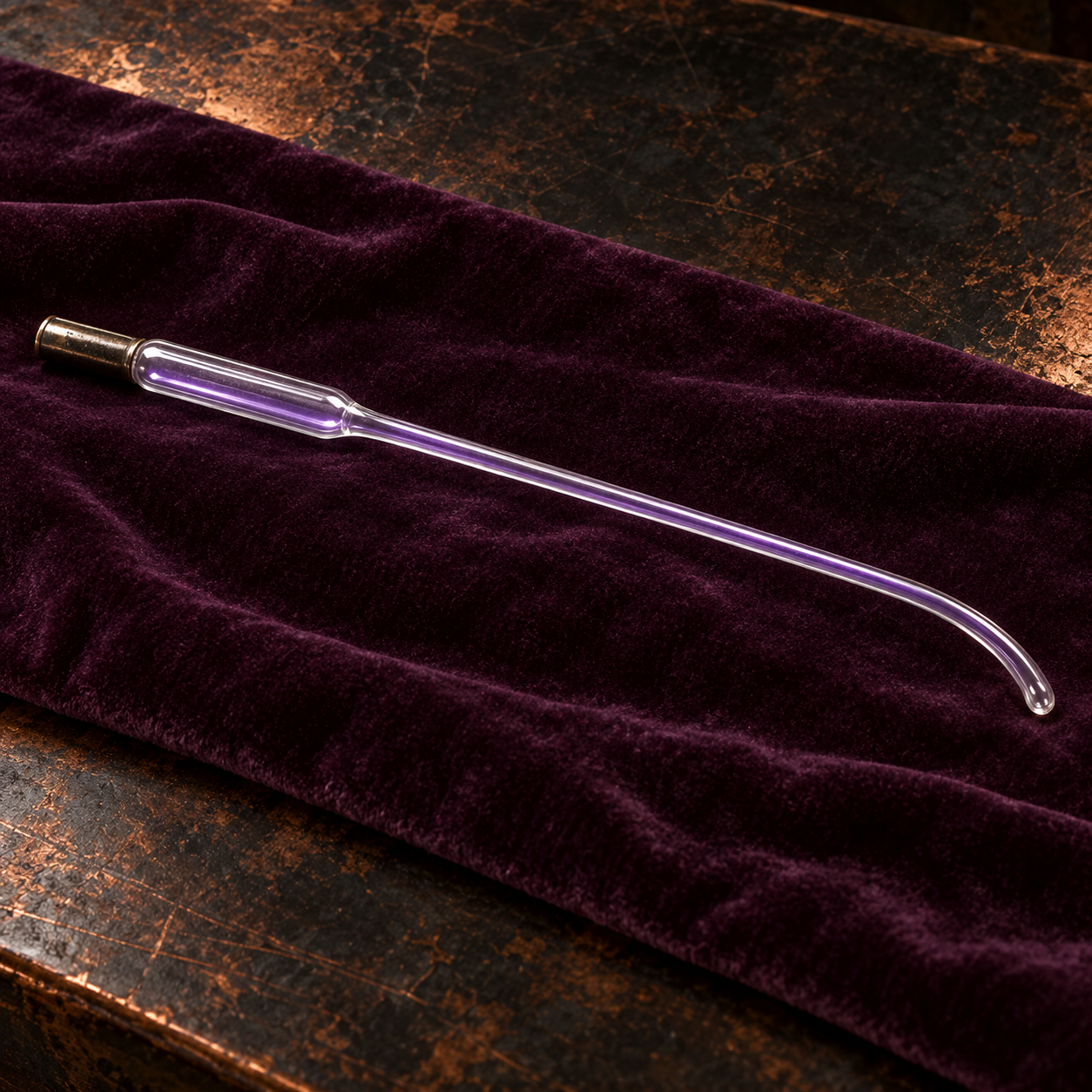
A long, narrow plain-glass form from the professional and specialist period catalogue.
Enquire for current availability.
A closer look.
The rarer cabinet, properly named
Some of the most easily overlooked pieces in a vintage cabinet are also the most specific. This long narrow tube belongs to the specialist historical range, where a slight curve and a carefully worked closed end distinguish one form from another. As a collector’s object it is valuable to the story of the set because it records the breadth of what the maker once offered.
Its place in the old catalogue
Period catalogues distinguished this plain urethral form from insulated versions intended for professional practice.
A small piece of a bigger machine
The glass belongs to a larger arrangement of generator, resonator and handpiece. The head gives each form its distinctive working geometry: a broad face, a small cup, a row of fingers or a carefully curved stem. For a collector, those differences are part of the engineering story as much as the glowing glass itself.
Finding the right example
This entry is for collector identification, historical study and sourcing enquiries. The period name is preserved so a surviving attachment can be correctly documented.
Enquire about this form
Tell us the maker and model, add a photograph of your handpiece and the attachment you are trying to replace, and we can discuss identification, sourcing and availability. The exact example and connection details are agreed individually.
About the illustration
Generated illustration of this historical electrode form, created for Forgotten Frequencies; not an actual stock photograph. The violet glow is artistic. The supplied example, gas fill, dimensions, connector and availability are confirmed by enquiry.
Historical reference
Master No. 14; Renulife No. 12. The Master Violet Ray catalogue · Renulife Electric Company, 1919 manual