
Rogers Vitalator — Marbled-Case High-Frequency Set
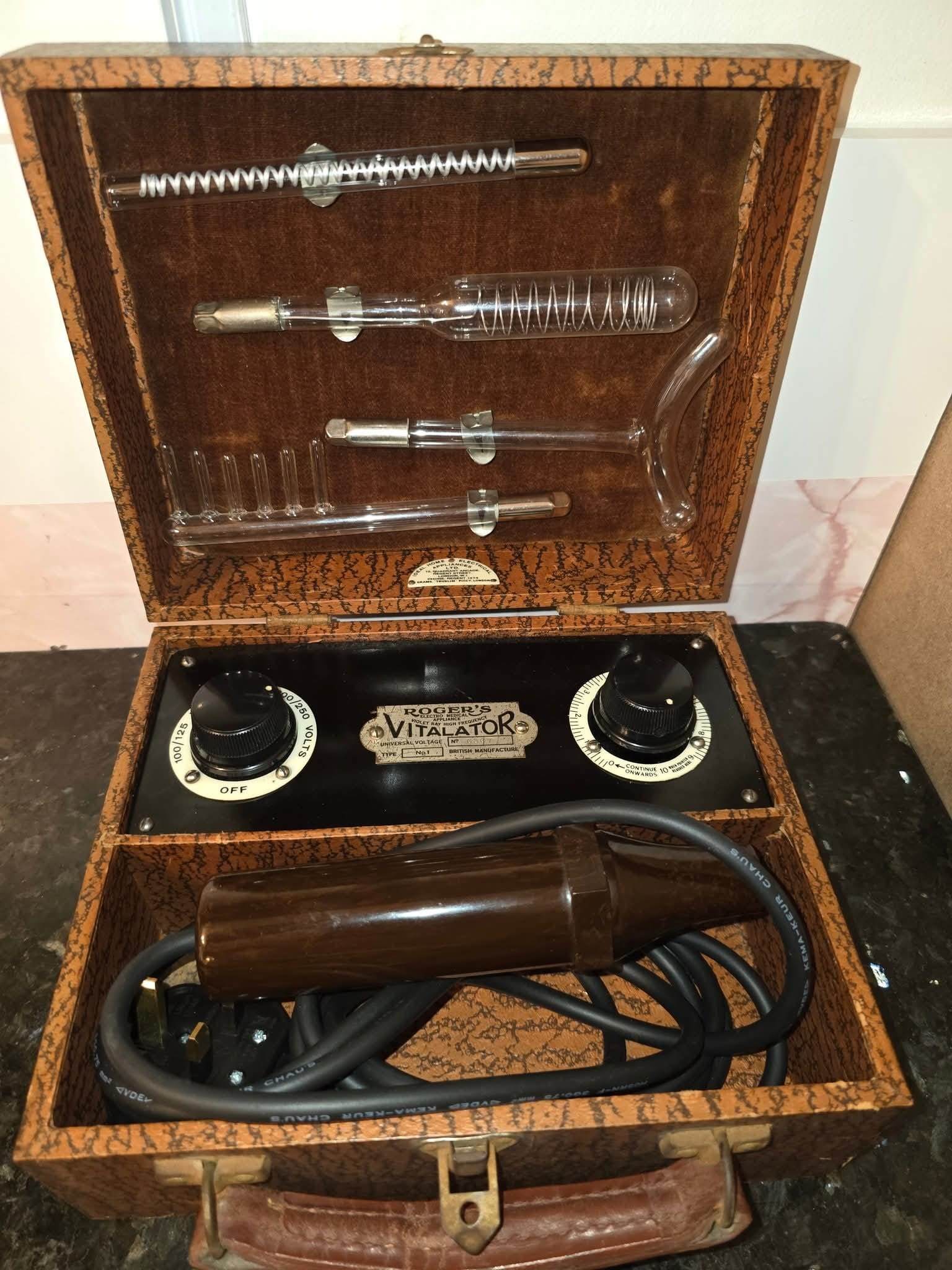
The Roger’s Vitalator name, an orange-brown marbled case, twin circular controls and a fitted glass collection make a memorable combination. A historical model study from the original Forgotten Frequencies site.
Earlier listing — preserved for reference. Enquire about availability or similar devices.
A closer look.
A name with a proper presence
Some machines stay in the memory because of a single detail. Here it might be the Vitalator name, the circular controls or that warm marbled case. Together they give the apparatus a distinctive face. The brown handpiece continues the palette, while the fitted clear glass in the lid brings a lighter, more delicate element to the whole arrangement.
This is exactly the sort of set we want people to spend time with. There is a design story in the way the glass is stored, another in the control panel, and another in the choice of a carrying case that gives the instrument such a recognisable identity.
A controlled arrangement
The earlier Forgotten Frequencies description presents the Vitalator as a twin-dial high-frequency instrument, with separate power selection and intensity adjustment. It discusses the lead, handpiece and specialist glass forms as parts of a complete working arrangement. We have retained that full account below rather than allowing the name to disappear into a passing mention of accessories.
Its particular charm is how directly the apparatus can be read from the photograph: case, controls, handle and glass are all there together. A collection becomes richer when it keeps the complete machines in view, along with the smaller components that tell the rest of their story.
Keep the conversation going
This page preserves the marbled-case Rogers Vitalator presentation in the ARC hive. Enquire about the model, send us a comparable plate or cabinet detail, or talk through a restoration project with a Vitalator of your own.
Original Forgotten Frequencies description · captured 1 November 2026
The following is the original description of the illustrated example from our earlier Forgotten Frequencies page, preserved exactly as captured. Its restoration and electrical-character statements belong to that historical account.
ROGERS VITALATOR British High-Frequency Apparatus • Universal Voltage • Precision Output Model: Rogers Vitalator Origin: England Era: Early–mid 20th century Voltage: Universal (100–125V / 200–250V) Controls: Separate power and intensity regulation Handle: Brown bakelite handpiece with heavy insulated lead Electrodes: Original specialist glass electrode set Case: Marbled bakelite-style case with velvet interior Design Focus: Reliability, balance, long-term use
ROGERS VITALATOR Overview The Rogers Vitalator is exactly what its name suggests — a machine designed to energise, stimulate, and interact rather than overwhelm. It’s not flashy. It’s not theatrical. It’s confident, composed, and extremely well judged. This is a unit built for people who actually used their equipment. Electrical Design Philosophy The Vitalator follows a very deliberate approach: Stable high voltage Extremely low current Smooth, controllable output curve Rather than pushing extremes, it prioritises consistency and operator control — a hallmark of British electrical design from this era. Control Layout The twin-dial arrangement allows: Independent power selection Gradual intensity increase Fine adjustment without sudden jumps This makes the Vitalator especially pleasant to work with. You’re never fighting the machine — you’re guiding it. Output Character Rogers units are known for an output that feels: Even Calm Well distributed across electrodes There’s a subtlety here that rewards patience. It’s a machine that responds rather than dominates. Electrode Set The electrode selection is practical and purposeful: Comb electrode for surface distribution Curved body electrode Spiral coil tubes for concentrated field geometry Straight probe electrodes for directional work Each electrode alters field shape and density, not just contact point — exactly how these systems were meant to be used. Handle & Cabling The brown bakelite handpiece is a standout: Excellent weight balance Comfortable grip Strong insulation Paired with the heavy-duty cable, it reinforces the sense that this was built for regular, serious use, not occasional novelty. Build Quality Everything about the Vitalator speaks to longevity: Thick control panel Robust switches Solid internal spacing These machines survive because they were never pushed beyond sensible limits. That restraint is the secret. Restoration Notes Rogers Vitalators benefit from sympathetic restoration only: Contact cleaning Dial calibration Insulation checks Capacitors changed No redesign. No modern shortcuts. They are already exactly what they need to be. Why the Rogers Vitalator Matters This is a machine from a time when high-frequency devices were treated as: Professional instruments Long-term companions Tools of interaction, not spectacle It represents the quiet backbone of British high-frequency history. Final Word The Rogers Vitalator is dependable, grounded, and deeply authentic. No hype. No gimmicks. Just proper high-frequency interaction, done the right way.
Enquire about this model, its history or a restoration project.