
Andre-CA Electronic High Frequency
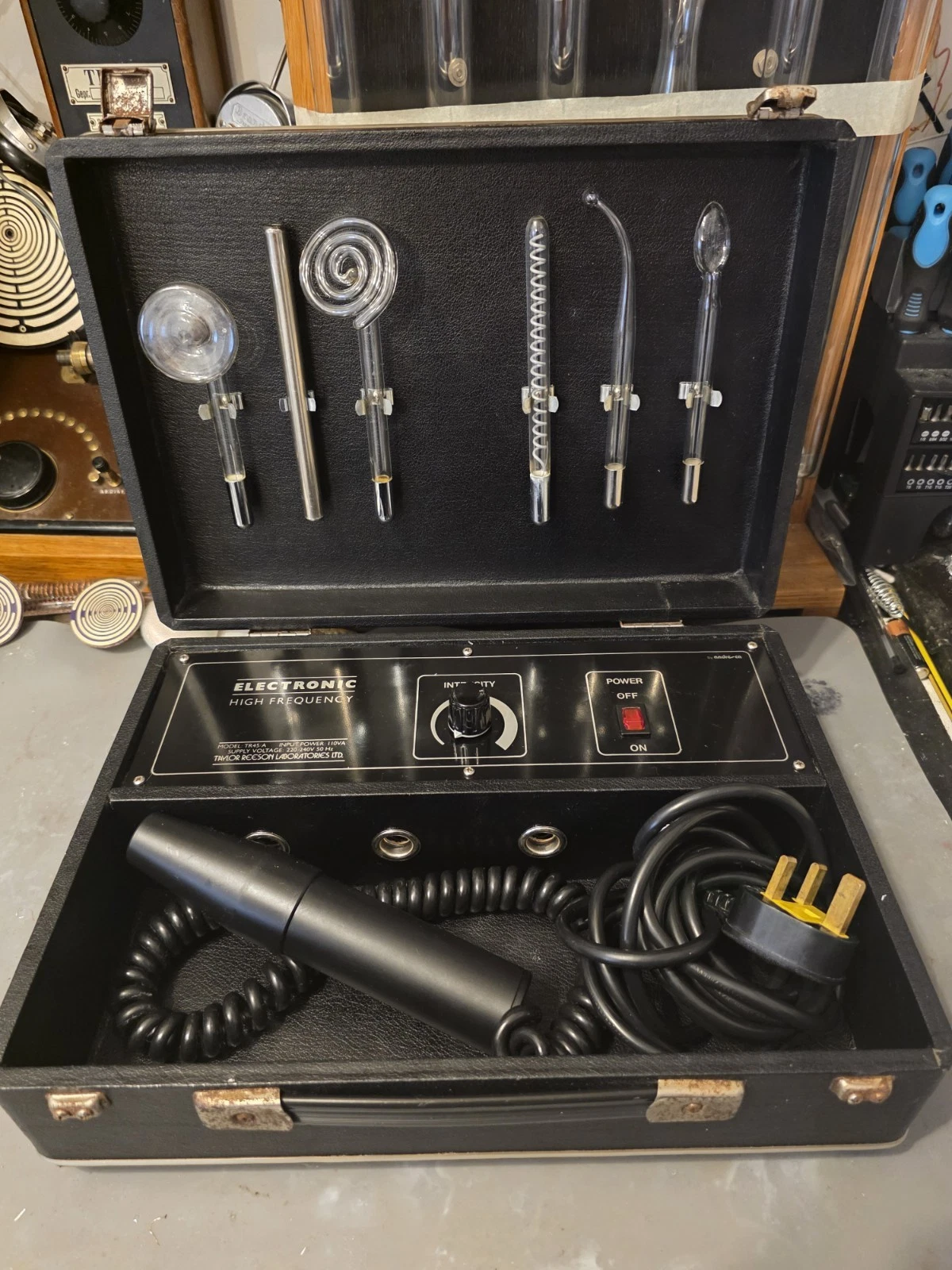
A darker, quieter beauty from the electronic high-frequency world. A clinic-style Andre-CA in a black fitted case with matching interior.
Enquire for current availability.
Device description
Equipment, restoration & condition wording · captured 31 October 2026. Enquire about current availability and exact inclusions.
A darker, quieter beauty from the electronic high-frequency world.
The Andre-CA speaks in a quieter visual language than the more theatrical velvet-lined sets. A black fitted case and matching interior frame an original control panel, handpiece and glass electrode collection. Its appearance leans towards the clinic or laboratory, with a straightforward layout that gives the apparatus a particular kind of poise. I find that restraint appealing. It asks you to look at the arrangement itself and discover the character in the way the components are presented.
Set beside earlier French and German cases, the Andre-CA offers a different expression of the high-frequency idea. The existing description notes that more modern laboratory appearance; it does not establish a precise date, and the design can be appreciated without forcing one upon it. What matters at first is the coherence of the set. The dark setting, the panel and the glass work together to create an instrument with its own clear identity.
The elegance of a direct layout
A straightforward control layout can be beautiful in its own right. It gives an instrument a sense of purpose, inviting the eye to follow a sequence of decisions rather than a decorative flourish. Here, the original panel anchors the arrangement, while the handpiece and glass collection extend it into space. The black case and matching interior keep the presentation visually consistent. There is an attraction in that concentration: the apparatus makes a calm, deliberate impression.
The glass brings a different quality into the scene. Even against a restrained setting, transparent forms have a way of catching attention and asking for closer inspection. Their exact shapes and inclusions need to be read from this example's photographs and confirmed details. That makes looking part of the investigation. The Andre-CA rewards a patient eye, especially when you move from the overall composition towards the smaller relationships between panel, handpiece, connections and attachments.
A place in the changing apparatus story
The name “Electronic High Frequency” opens a useful avenue of enquiry into how this particular apparatus was built. It is a prompt to seek the exact circuit and model information, rather than assume that every violet ray uses the same internal arrangement. The broader field includes instruments with differing ways of generating and controlling their output. Comparing them becomes much more interesting when those differences are allowed to matter, both technically and as part of their visual design.
The Andre-CA makes that comparison tangible through its own exterior language. Its clinic-style presentation feels distinct from a decorative portable cabinet, while the handpiece and glass maintain a visible connection to the wider high-frequency tradition. You can see continuity and change in the same object. That is a fascinating quality for a collection: one machine becomes a bridge between different approaches to apparatus, inviting you to investigate the engineering as carefully as you enjoy the design.
Finding affection in the understated
Some instruments win affection through colour and ornament. Others grow on you through the clarity of their form. For me, the Andre-CA belongs to that second experience: the longer you look, the more the coherent arrangement begins to speak. Its black fitted setting gives the original panel, handpiece and electrode collection room to establish their own relationships. The result is a machine whose atmosphere comes from concentration, with a laboratory presence that feels quietly compelling.
This is why it deserves its own space in the cabinet and its own account. The exact attachments and restoration details should accompany the photographs, allowing the object to be understood on its own terms. There is a particular pleasure in preserving an apparatus that expands the range of a collection. The Andre-CA adds another accent to the story of electrical exploration, and reminds us how much character can be held in a direct, carefully presented instrument.
Condition, configuration & inclusions.
The original control panel, handpiece and glass electrode collection are presented together. This apparatus has a more modern clinic or laboratory appearance than the earlier French and German cases, with a straightforward control layout. Enquire for the exact attachments and restoration details.
A working fragment of the age of electrical experimentation: coils, glass, analogue controls and visible plasma. These historical instruments are offered for collecting and research, without medical treatment claims.
Please enquire about current availability, the exact item pictured, condition and inclusions. All questions and arrangements stay here with Forgotten Frequencies.