
Restored Urval Violet Ray
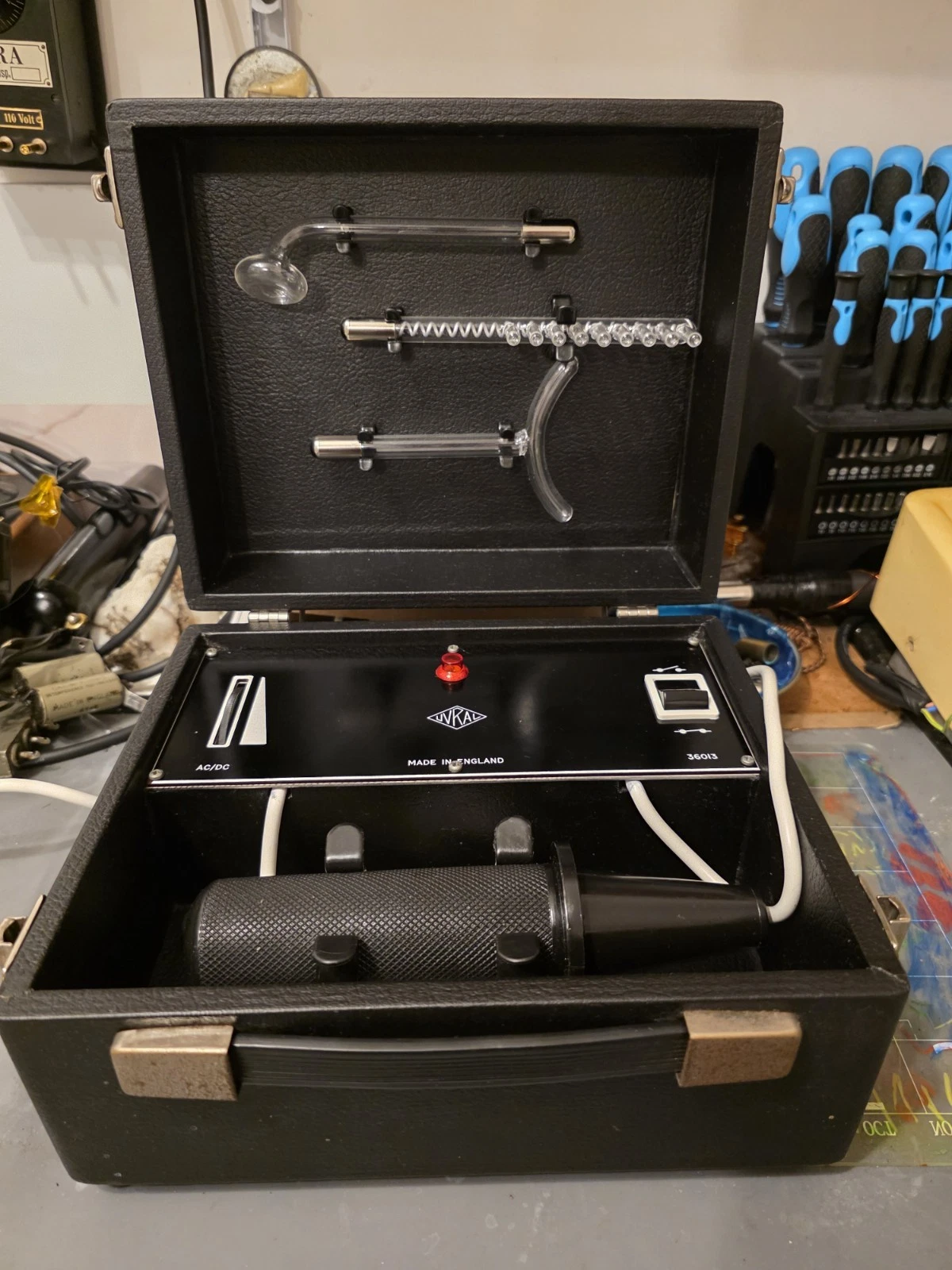
Understated British character, with an electrical story beneath the black finish. A scarce English Urval with an understated black finish and period AC/DC markings.
Enquire for current availability.
Device description
Equipment, restoration & condition wording · captured 31 October 2026. Enquire about current availability and exact inclusions.
Understated British character, with an electrical story beneath the black finish.
The Urval does not need a dramatic colour scheme to make an impression. Its understated black finish and period AC/DC markings give it a quieter, distinctly technical presence. This scarce English apparatus invites the sort of attention that begins with the details: a name, a marking, a control, the relationship between exterior design and the work going on inside. To me, it has the appeal of an object that rewards curiosity without demanding it loudly.
Its recorded restoration details add another layer. The notes describe dual internal fuses, a fused plug and an integrated suppression box. Those are specific features to discuss in the context of this particular machine's present configuration. They also encourage a closer look at the practical engineering surrounding a high-frequency instrument: the less theatrical components and arrangements that make the larger electrical idea into a piece of equipment someone can actually handle, maintain and understand.
The story in the markings
Period electrical markings are worth reading as part of an instrument's identity. The Urval's AC/DC lettering belongs to the apparatus and the design language of its time; it is not, by itself, a description of the supply arrangements to assume today. Keeping that distinction clear respects the machine. It allows its original markings to remain interesting historical details while its actual present setup is explained directly, rather than inferred from a few letters on the exterior.
The black finish gives those small details room to speak. In a collection with bright case linings and exuberant glass, this quieter presentation offers a different kind of attraction. It draws attention towards form, labelling and the particular decisions of the maker. I like that variety. A serious affection for vintage apparatus should have space for the restrained instrument as well as the theatrical one, because the ingenuity is not always announced in the same visual language.
Beyond the visible discharge
High-frequency apparatus is remembered for its luminous glass, yet much of the engineering interest sits away from the glow. Across traditional violet ray designs, the electrical arrangement must establish changing conditions that a suitable electrode can reveal as a discharge. Supply arrangements, control, insulation and the organisation of components all belong to the fuller story. The eye-catching endpoint becomes more interesting when the rest of the instrument is allowed its proper share of attention.
The recorded suppression box and fusing arrangements make this Urval a useful invitation into that fuller view. Their exact role and configuration should be established from the machine's restoration details rather than guessed from a generic circuit. What matters for the collector is the opportunity to look beneath a simple visual category. 'Violet ray' names a family; an individual Urval is a particular surviving arrangement of parts, decisions and interventions that deserves its own account.
A British voice within the collection
The collection becomes richer when the machines are allowed their regional and individual identities. This English Urval offers a different point of comparison from the French and German apparatus around it. Its scarcity in the listing, restrained finish and original markings create a subject worth documenting on its own terms. The surviving apparatus has its own place within the varied landscape of British high-frequency equipment, a quieter voice that becomes more absorbing as you get to know it.
We can discuss the present supply requirements, restoration notes, condition and exact configuration directly. Bring your interest in the markings, the internal arrangements or the model itself, and we can begin with this particular example. If you appreciate engineering whose character emerges gradually, the Urval has an appealing kind of depth. It asks you to move closer, read carefully and discover how much interest can live behind an unassuming black finish.
Condition, configuration & inclusions.
The seller’s restoration notes describe dual internal fuses, a fused plug and an integrated suppression box. The original markings describe the period design; the present supply requirements, electrical setup and condition should be confirmed directly before use. A distinctive piece for the collector of British high-frequency apparatus.
A working fragment of the age of electrical experimentation: coils, glass, analogue controls and visible plasma. These historical instruments are offered for collecting and research, without medical treatment claims.
Please enquire about current availability, the exact item pictured, condition and inclusions. All questions and arrangements stay here with Forgotten Frequencies.